


A CLOSER LOOK WITH RETRO CACTUS
How to Recognise Ercol Furniture
Look at the furniture, not just the label.
When we assess an Ercol piece, we begin with its overall shape and proportions, then move closer to the handles, joints, timber and construction. No single feature proves its identity; the details need to agree.
THE RETRO CACTUS APPROACH
Stand back. Move closer. Open it. Turn it over.
01 / Stand back
Begin with the silhouette, balance and overall proportions.
02 / Move closer
Read the handles, joints, grain and shaped timber.
03 / Open it
Look at the drawers, fittings and internal construction.
04 / Turn it over
Check the legs, underframe, castors and maker’s marks.
01 / STAND BACK
The first clue is the whole shape
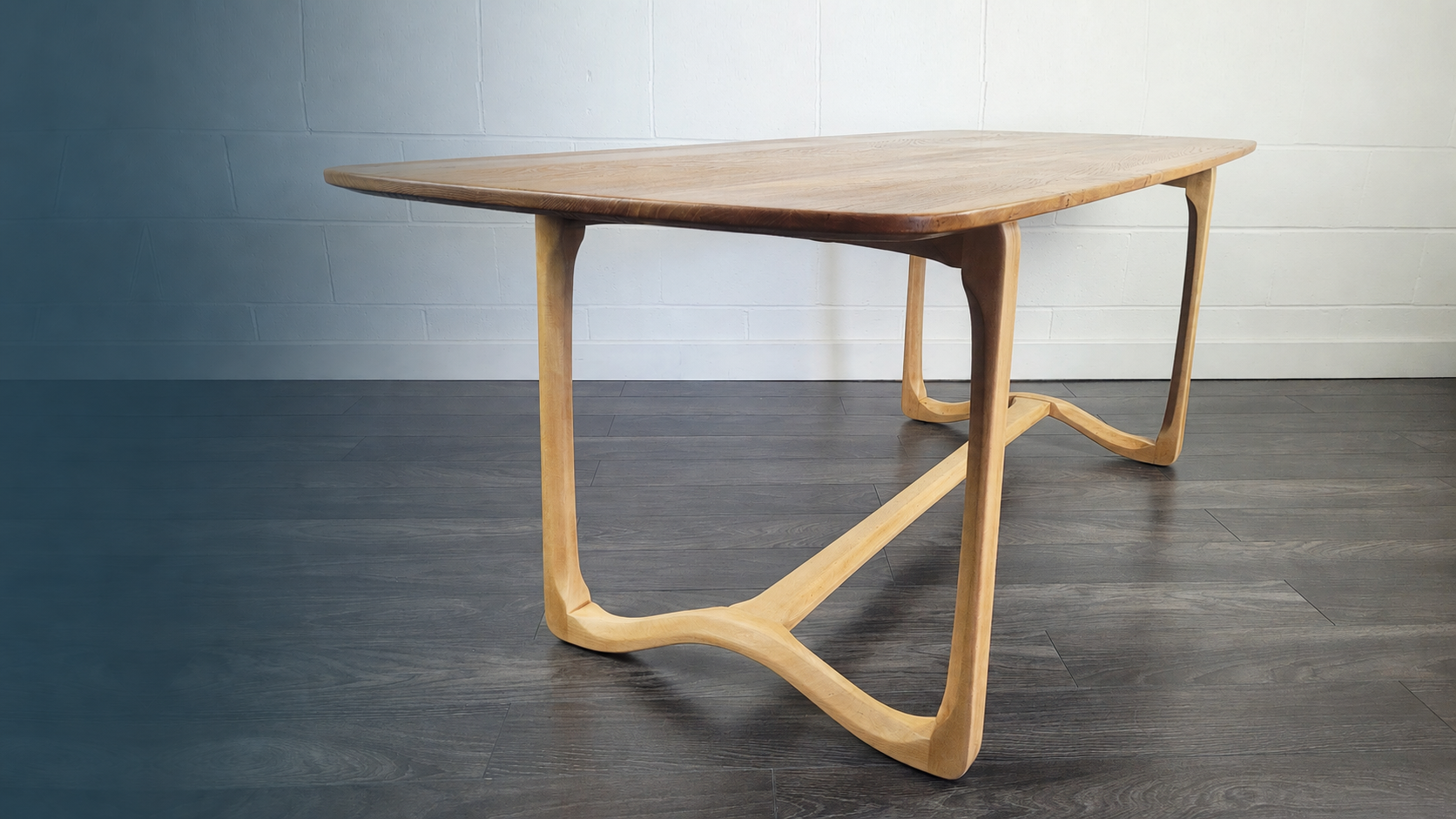
At Retro Cactus, we begin with how a piece sits: its width, height, balance, curves, legs and the relationship between solid and open space. The design as a whole should make sense before any single detail is considered.


Read the silhouette
Look for a balanced relationship between the body, base and open space beneath it. Curves, angles and proportions should feel connected—as though the piece was designed as one complete form.
02 / MOVE CLOSER
The details carry the design
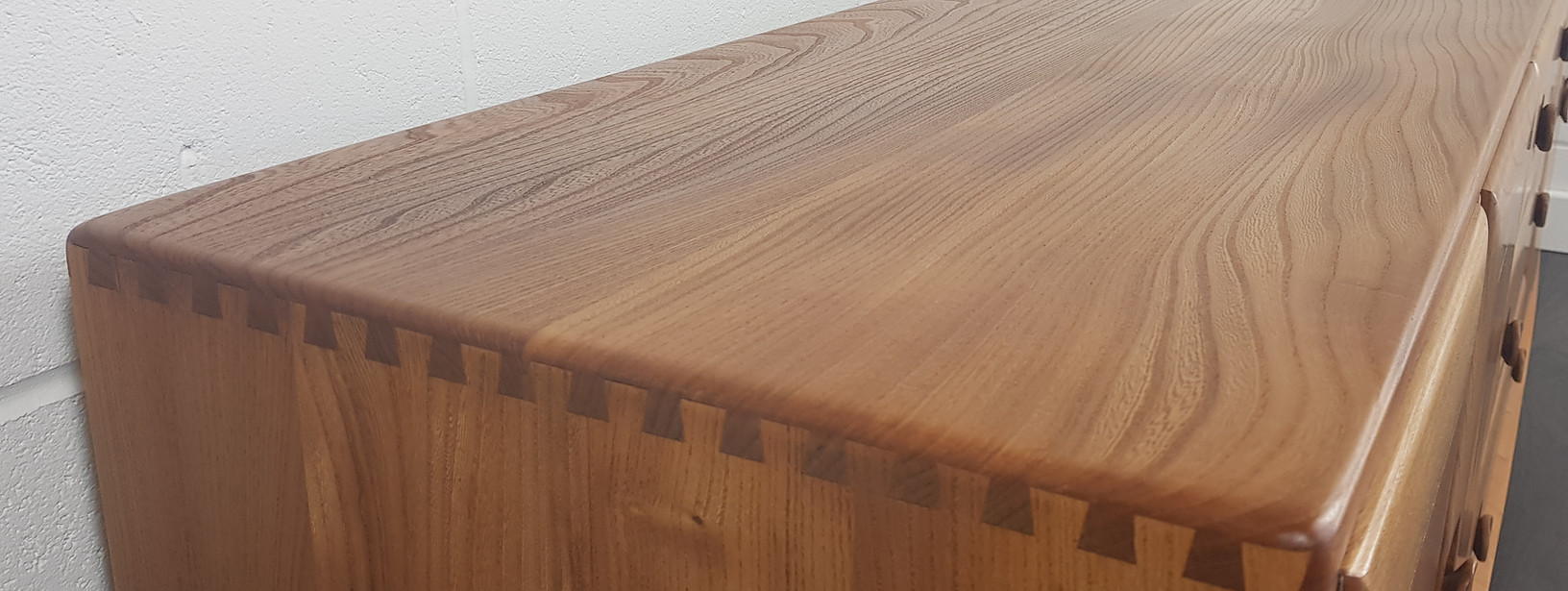
Now we look at the parts that give a piece its character: shaped wooden handles, exposed joints, flowing elm grain and carefully formed spindles. We are not looking for one isolated clue, but for design decisions that belong together.


When construction becomes decoration
The exposed dovetail joints do two jobs: they hold the piece together and give its edges a strong visual rhythm. Beside them, the flowing elm grain becomes part of the composition rather than simply filling a surface.
Handles shaped into the furniture
The shaped wooden pulls are treated as part of the composition, not added as an afterthought. Their rounded forms repeat across the doors and drawer fronts, turning a practical detail into a recognisable feature.
03 / OPEN IT
Good design continues inside
The outside catches the eye, but opening a piece shows whether the same care continues through its drawers, compartments and fittings. At Retro Cactus, we compare construction, materials and wear rather than relying on one label or feature.


Even the trays are dovetailed
These small internal trays could have been plain storage boxes. Instead, their dovetailed corners turn something largely hidden into a carefully made feature—one most people only discover when they open the cabinet.
04 / TURN IT OVER
The final clues are often out of sight
Legs, stretchers, shaped underframes and castors show how the weight is carried and how the piece was intended to sit. Labels and maker’s marks may appear underneath, inside, on the back or at the side. They can help, but they are supporting evidence—not a substitute for the design and construction around them.


Look at how the weight is carried
The splayed legs, shaped supports and long stretcher work together as one balanced underframe. It carries the cabinet visually as well as physically, making the structure underneath part of the design.
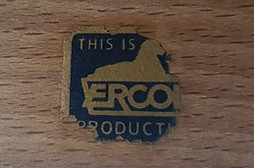
A label is part of the evidence
A surviving label can be a useful clue. We read it alongside the timber, construction, proportions and other features of the piece. See more original labels and maker’s marks on our About page →
ERCOL AT RETRO CACTUS
Recognition is only the beginning
At Retro Cactus, recognising a piece is the starting point for understanding how it should be treated. We assess its timber, construction, condition and individual character before deciding how to refinish it. Every photograph on this page shows real furniture that has passed through our workshop—not an AI-generated substitute.

Looking for a particular Ercol piece?
We may already have one in stock or awaiting refinishing. Send us a photograph and any details you have through the contact form, and we will let you know whether we have one or can source it.
FEATURED IN RECLAIM MAGAZINE
Reclaim Magazine includes Retro Cactus in its guide to iconic chairs as a specialist in original vintage Ercol furniture. Read the article →